One Year Later

My son’s last day in a classroom was one year ago today. At the time we thought that in-person schooling would pause for a few weeks or maybe even a month or two. When June rolled around, we figured that, certainly, he’d be back in the classroom by the fall. Today is March 13, 2021 and he still hasn’t returned to school in-person. Neither have I and neither has my husband. We’ve all been Zooming around the house for the last year. With all of us either teaching online or learning online, I got to thinking about what those of us who have been teaching online have also learned. 

When we first shifted to remote pandemic teaching, there was a big push to learn about apps, programs, and other technologies to engage students. Teachers learned how to use GoogleClassroom, GoogleMeet, Jamboard, Flipgrid, Padlet, and of course Zoom. They scrambled to organize online classroom space and to connect with students in a stressful and ever-changing situation. 

When the fall term rolled around, educators had a handle on the online teaching thing. They had the summer to regroup, but the uncertaintly of what the 2020-2021 school year would look like persisted. Would schools open for in-person teaching? When might that happen? What would that look like? The school year dragged on and here in California case rates seemed to drop, but then soared well above where we had previously seen them. Finally, with just over a quarter of the school year remaining, we are talking about returning to some kind of in-person instruction–but to be fair–we are not returning to school as we knew it–I have to wonder what we have learned and what practices and technologies we will continue to use moving forward. 

The problems with online teaching and learning have been widely covered in the news and all across social media. We all seem to be well aware of the struggles teachers, students, and parents have experienced.

That said, there are some positives to come out of remote pandemic teaching and learning.

Teachers and students have learned new ways of communicating, learning, and creating.  I have been asking educators and students what they hope to continue doing or using when they return to in-person teaching. The responses have ranged from simple practices, like posting agendas and class notes to GoogleClassroom (or whatever learning management system (LMS) they are using), so that students who are absent can review what they missed. Teachers are posting slide decks they use for in-class presentations on the LMS. This is such a simple idea that supports students. But, this also seems to be a practice that would also help all students, not just those who missed class. After all, why shouldn’t they be able to access the slide deck in case they want to review it later? Really, this is something we could have been doing pre-pandemic. But, sometimes we need a nudge.

https://platform.twitter.com/widgets.js

Another response I received talked about how students have been using (because their students are back in the classroom) GoogleMeet for group collaboration with a student who was absent.

https://platform.twitter.com/widgets.js

Other educators have embraced using tools that allow for digital collaboration like Jamboard and Padlet. These apps can be used to continue the conversations we have in class, much like discussion boards can be used in the same way. Even when students return to class, tools like FlipGrid and WeVideo allow students to show their content knowledge (and personalities) in video form. 

https://platform.twitter.com/widgets.js

Perhaps some of the most basic things teachers will bring to their classrooms is a digital classroom that contains resources and assignments all in one place. It’s not very glamorous or earth-shaking, but it IS very helpful for students. And while many teachers were already using GoogleClassrom or some other LMS for this purpose, after pandemic teaching, it would seem that more would be in the habit of organizing this information–notes, slide decks, digital “handouts,” assignments and such in a clearly organized way so that students can quickly locate what they are looking for. It’s also helpful for teachers who don’t have to organize quite so many stacks of papers. Online tools also typically give teachers access to data revealing where students struggle, too.

https://platform.twitter.com/widgets.js

Pandemic teaching pushed educators into a vulnerable and uncomfortable position in which we had to try new things and risk failure . . . in font of our students. Isn’t that great! I mean, really, we ask our students to do things that are new, uncomfortable, and that cause them to feel vulnerable all the time. Isn’t is good to put ourselves in their shoes in this way. It has also been humanizing in a way that we might not have expected. When we try something and fail, but adjust and try again, that process in and of itself is a valuable message to students. After all, most of us try to hide our failures from students. Hopefully, this bravery in innovation will stick.

For many years prior to the pandemic, the concept of the flipped classroom was widely discussed. And while many teachers used this model, many others were intrigued but found the idea of creating their own videos to be daunting. Now many teachers have gained experience in making videos and are positioned to flip their classrooms upon returning to in-person teaching. Just the experience and practice making videos themselves is something that teachers are likely to continue doing. Short video tutorials for example, are useful for students to review even when more traditional models of education return. This practice also helps teachers support students when they are asked to create videos of their own–another practice that is likely to continue.

Despite all the challenges, educators have come up with some really incredible creative solutions. North High School dance teacher, Coral Taylor put on the annual dance show even when there was no in-person school. Students choreographed and recorded their numbers mostly separately. A few recorded in an empty parking structure. They edited their pieces and the show was streamed live on YouTube. My son is on the ComedySportz team at his school. ComedySportz is an improv competition. How can that possibly happen remotely? Over Zoom, of course. And the best part was that family and friends on the other side of the country could watch, too.
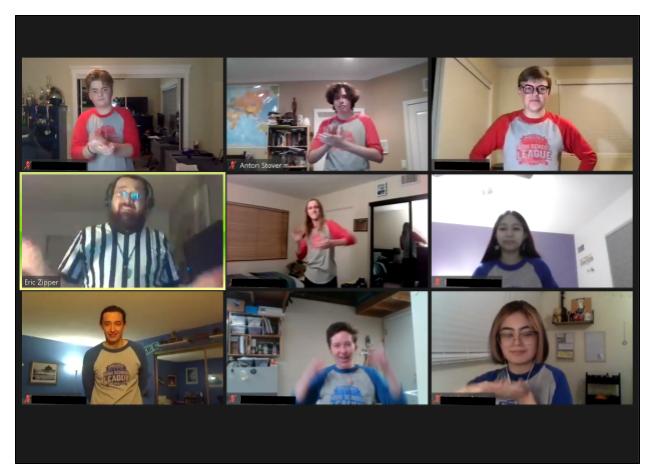
ComedySportz February 2021

We cannot talk about what we have learned in the era of pandemic teaching without exploring the vast inequities that have been thrown in the limelight. We should have known these inequities existed all along, and many teachers were acutely aware of the struggles their students experienced. Anyone who, at this point, believes that all students have access to devices, broadband internet, and a quiet space to work at home has their head in the sand. Add to that the vast number of students who also may not have supervision at home or who experience food insecurity on a regular basis, and it becomes clear that A: schools provided many more services than “simply” educating students and B: the time has come to tackle these inequities in our communities. There should be no looking back on these issues.

There is no doubt that this last year has been rough on students, teachers, and parents. But, maybe among the shifts and the problem-solving, educators have also been able to reflect on their practices and determine what matters most in their interactions with students. I can only hope that this is the case and that this will lead to a real shake up in education like nothing we have seens in our lifetimes. We have an opportunity here to narrow equity gaps, to encourage self-discipline in students, creativity, problem-solving, and innovation. While we may be excited at the propect of moving back to in-person schooling, let us internalize the lessons of the last year. We can’t go back to the way things were and we shouldn’t even try. 

Featured post

Equity for Introverts in the Online Classroom

I continue to be surprised by the lack of hybrid and online classes offered in high schools. Colleges and universities offer a wide variety of hybrid and online classes and degree programs. I taught my first fully online class for high school students in the summer of 2009. That’s 10 years ago. Still my son’s high school and several others in the neighborhood do not offer these options.

So, why is that?

I’ve heard a lot of arguments as to why schools don’t offer hybrid or online courses. They range from concerns about cheating to the lack of rigor to the lack of teachers who are willing to teach them to the cost of the learning management systems (LMS). There are some valid concerns here, but there are also some real benefits for students in these options.

In 2010 I was permitted to teach my first fully online class during the regular school year to students at my school after much pushing and prodding and maybe even a little begging. I really wanted to try it. I found it to be challenging, liberating, and a way to creatively solve problems. But, I understand why teachers are resistant. It’s a different way of delivering instruction. It is unfamiliar and maybe even a little scary. Over the years, I have observed how online options were beneficial for many athletes, students with outside responsibilities, and generally for those who needed flexibility in their schedules. I now see that these online options also offer a way of increasing equity for many of our students.

My college students have just finished reading Malcolm Gladwell’s Blink. In the Afterword, Gladwell discusses why he believes defendants in criminal cases should not be present in the courtroom. He argues that they should respond to questions via “email  or through the use of an intermediary” and that “evidence and testimony in a trial that tips the jury off to the age or race or gender of the defendant ought to be edited out.” This has me thinking about the effect evaluating student work in online classes. Yes, we may have biases about students based on their names. But, without seeing them in person, some of our inherent biases are removed. This seems to me to be one way to provide equity.

But, equity isn’t solely about addressing racial or gender bias. It also seems that hybrid and online classes offer a way to be more inclusive for introverted students. There is a current trend in education to focus on collaboration. While practicing working with others is an important skill, for many students (and adults, I might add) it can be exhausting. There are approximately 3,000 students at my son’s school. Imagine attending such a huge school and then having to work in groups in nearly every class. It’s no wonder many teens want to go straight to their rooms to be alone.

Most adults (unless they work in a school) haven’t spent time in a high school class since they were in high school. Let me tell you that high schools are full of energy, hormones, emotion, and noise. I loved working in a high school for many years. But, the constant interaction with so many humans and the level of sensory input can be very draining . . . especially for introverts. This is where hybrid or fully online classes can provide some relief. Students can focus and work on their own. Yes, good online classes are interactive, but generally students can decide how they spend their time. They can move on when they are ready and slow down when they need to. And, they are not required to socialize as part of an assignment. They can focus on the task at-hand. They get a little break from the energy and noise of a traditional classroom. This allows students to recharge. Shouldn’t they be given that option?

There is quite a lot of discussion around the subject of equity in educational circles, but I rarely hear a case for why online course offerings can be tools for equity and inclusion. Maybe it’s time to start the conversation.

Back-to-School Night Blues

It’s Back-to-School Night season and that means frustration for many parents. I’ve attended approximately 22 Back-to-School Nights as a teacher and I will sit in my 11th one as a parent this week. For the teachers, it is an exhausting night. We are “on” all day with our students and then must return to be “on” for parents. It makes for one exhausting day, and a rough morning the next day. But, it’s one night. It’s often the only face-to-face contact we have with parents. So, it can be our only chance to connect with the families of our students. So why don’t schools make sure parents feel welcome?

My parent friends often dread Back-to-School Night though they want to meet the teacher(s) and support their kids’ education. These parents generally are happy with their kids’ school. But, the Back-to-School Night can sometimes be unnecessarily difficult for parents.

  • Students aren’t allowed to attend Back-to-School Night, but the schools don’t offer any childcare. This is an insurmountable hurdle for many single parents of elementary school children. It is also promatic for many other families in which one parent works the night shift. I know there are liability, staffing, and other issues. But, certainly some schools have found a way to remedy this haven’t they?
  • Physically navigating the campus can be really tough, especially for parents of high school students. At my son’s school our “passing period” at Back-to-School Night is five minutes. His school is huge–over 56 acres. I jogged from his drama class on one end of campus to the gym for PE last year and was still late. I arrived panting and sweaty and missed the first couple of mintues of the presentation. I’m not sure administration is always aware of the parent experience. Sometimes they do know notice, but choose not to adjust. A teacher friend of mine once told me about an administrator who commented in a school-wide email it would be fun to watch parents “stumble around in the dark” at Back-to-School Night. Clearly this person has no business working in a school.

And, it’s not just Back-to-School Night. My son’s elementary school also held Open House in the spring. This was a more casual event in which parents could browse the classroom, look over their student’s work, and maybe even chat with the teacher for a few minutes. Kids were encouraged to attend so they would be able to take the lead and show parents around. It was a pleasant evening. That is until my son’s school decided to change Open House to Portfolio Day and move it from the evening to 9:00 am. This meant that my husband and I had to decide who would take a half-day off of work to browse the classroom for 10 minutes. What an insult to working parents. And, let’s face it, few dads came. Like it or not, in many two-parent working families, men make more money than women and may not have the flexibility to take time off for Portfolio Day. I understand that the teachers voted to move the event in order to avoid having another night event. And, again I know how exhausting these days are. But, to me it sent a very clear message that parent involvement was not very important.

Many schools have sign-in sheets at Back-to-School Night. Teachers use these to gather the names of parents who attend. For what purpose, I’m not exactly sure–to know which parents “care enough” to attend. That’s a dangerous assumption. To gather contact information? That should be in the system used for attendance, grades, and emergencies. To give extra credit to students? At a school where I previously worked, teachers were directed to tally the number of adults in attendance each period and submit those numbers in to the office the following morning. I always wondered what happened to those attendance records. Did anyone track parent/family attendance? At some point, I learned they were thown away. So, I stopped turning them in. But, really, shouldn’t schools be curious about just how many parents are coming to Back-to-School Night? And, if attendance is poor, shouldn’t administration ask why . . . and more importantly strategize how to get more parents to come?

Deadlines, Late Work, and Who has the Best Story: Why the One-Time Late Pass Helps Reduce Bias

I know educators who say they don’t accept late work. I understand that students must be accountable and that meeting deadlines is part of life. I often hear the reasoning that “life doesn’t accept late work” or something along those lines. But, is that really true? If I fail to pay my property taxes on time, does the assessor simply refuse my payment? Of course not. Yes, I have to pay a penalty, but I can still pay. This is the case in many circumstances. Sure, there are times when a deadline passes and there is no going back, but these are students we’re talking about. In my case, these students are adults with jobs, families, responsibilities. And, things come up that derail them sometimes.

Recently I was chatting with another educator and she said she simply does not accept late work. She went on to say that actually she would accept late work . . . in “special circumstances.” Sounds fair, right? But, is it really? How do we define “special circumstances?” Who are we to judge what is a legitimate excuse? Would we require proof–a doctor’s note perhaps? But, what if the circumstance is a bipolar family member who has an off-day and causes a student to miss school? Or, in the case of adult students, what about the boss who requests they fill in for someone who didn’t show up? There’s no doctor’s note “excuse,” but these are certainly justifiable reasons, right?

But, there is a danger to knowing the circumstances students face. This can lead us to unfair practices. For instance, do we extend a deadline for a student who (in the case of community college students) has a sick child and needs to miss class. Or whose car broke down on the way to school? Do we only extend deadlines for those with the best story? How do we verify the truthfulnes of the stories? I, for one, hate being put in the position to evaluate the reason for a missed assignment. I also don’t want to encourage my students to lie to me and come up with a “good excuse” for missing a deadline, just so they may be granted an extension.

This is why I give each student a one-time late pass. Students can use it for a three-day extension on major assignments, no questions asked. It’s a safety net for when life gets in the way of school.

Screenshot_20181018-135112_20181018140441938

This has another huge benefit. No longer are the students with the best story . . . or the best storytelling skills, the only ones who get a reprieve. I worry that when we claim “no late work is accepted,” but still make exceptions for “special circumstances,” that it will be the articulate, outgoing, attractive student who will be granted extra time, while the introverted student or the one who hasn’t quite honed the ability to advocate for his/herself . . . and, let’s face it . . . play the game, will simply be penalized. The one-time, no questions asked late pass is egalitarian. Everyone gets the same shot. And, I don’t have to worry that I am being manipulated or look for holes in a story that may or may not be true. Students with legitimate reasons are also permitted to keep these circumstance private.

Sure, there are still times when we have to make a judgment call. But, it seems to me that this really simple tool gives students control and security in knowing that when unexpected challenges arise, they will have a safety net.

Introductions and Bouncers: There’s a Reason for the Velvet Rope

Last week I went to Back-to-School Night at my son’s high school. Having taught high school for over 20 years, I had a good idea of what to expect. Most of his teachers were warm and professional. The parents were sweaty and tired from racing from one end of campus to the other in five-minute passing periods. (The kids get 10 minutes.) There was one simple omission by a teacher that stands out to me, though.

As I walked into the gym to hear about physical education (PE), I was directed to an area of the bleachers for ninth-grade PE (as opposed to weight training on the other side). Clearly there were several classes of PE offered that period. There were two teachers/coaches, but only one did the talking. He spoke about physical fitness training, grading, and “dressing-out” (changing into PE clothes). It was informative. But there was one thing missing. He never introduced himself or the other teacher/coach. Sure, the PE classes are (supposed to be) run the same way, so it shouldn’t matter which teacher my kid has. But, it’s just insensitive and rude to not introduce yourself to a room full of people who don’t know you. I wasn’t even sure which of the men was my son’s teacher.

Adults in schools sometimes forget that not everyone knows who they are, and as a result the social nicety of introducing oneself is forgotten. This is a problem because it separates those who are “in the know” and those who are on the outside.

Just this week I was at a meeting for my job, and the presenters did not introduce themselves. Not everyone in the room knew their names and they did not know everyone in the room. By not introducing themselves, it set a tone of exclusion for those of us who didn’t know who they were. Pretty telling, don’t you think?

Social niceties are important to model for our students–especially in high school. Too often we complain about how rude teenagers are. And, yes, we may need to remind them to take their earbuds out when coming in at lunch to ask a question, or to ask us (using please and thank you) when requesting a signature on a permission slip, grade check, etc., instead of just shoving it in our faces. But, adults don’t get a pass and sometimes they are the worst culprits.

At one high school where I worked, it was common to see parents wandering aimlessly in the office searching for the counseling office, attendance or records clerk, an administrator, etc. Teachers and other adults would rush past them instead of asking who they were looking for and offering assistance. Not the most welcoming or confidence-inspiring experience to have at your child’s school, is it? Now there are security measures in place, so this is a less common occurrence, but it’s still revealing about the school culture.

But, it wasn’t just the dismissal of parents that was telling. Phone etiquette was another frustration of mine. People calling from outside campus could not ring directly through to classrooms, but faculty and staff could. Many times my phone would ring during class and an adult would launch into questions about a procedure, a specific student, or with a technology question. The problem was two-fold. One, these calls often came in during class . . . when I was teaching. Two, the caller often failed to announce his/her name. Usually I recognized the voice, but not always. So, I started simply asking “And, to whom am I speaking?” Passive-aggressive? Maybe, but it was just so off-putting to pick up the phone not knowing who was on the other end and have him/her simply assume I would recognize his/her voice with no introduction. How hard it is to say, “Hey Mitzi, this is John. I have a quick question. Do you have a moment?

But, the worst example of adult rudeness occurred when my students gave formal speeches. Years ago I started having students fill various classroom jobs during these presentations. One would be a videographer and another would be the “bouncer.” (No, there wasn’t a velvet rope, they didn’t check IDs or throw anyone out.) The bouncer was charged with sitting in a high chair on casters in the doorway. He/she would block people from entering the room. This was to prevent the delivery of call slips to the office and other notes from interrupting the speaker. And, these were delivered frequently. Rarely did we get through a class without some kind of interruption. The student bouncer would politely ask for the papers and would hold them until the speaker was finished and then would give them to me to distribute. Of course, I instructed students that if an adult arrived and had an urgent need to speak with me, to direct them to the back door so they could enter in the back of the room where I sat during speeches.

Untitled drawing (1)

Having the bouncer had a few benefits. Students had a visual reminder not to interrupt speakers. Speakers were reminded that they had the floor, it was their time, and they should do their best. When student aides arrived with call slips and notes, things went smoothly because the bouncer would quietly collect them. But, when adults came by, they almost always pushed past the bouncer and walked right in–often directly in front of the student speaker. Then they would find me and start talking to me–WHILE A STUDENT WAS GIVING A SPEECH. I would usually whisper a quick response and indicate that we could talk later. Not once was the interruption an emergency or something that couldn’t wait.

This made me furious because kids (well, most of them) spent a lot of time preparing these speeches. Formal speeches were a big part of their grade and I had an obligation (and desire) to really listen to what they had to say. It’s tough to be a teenager and give a speech before your peers and it’s hard to get back on track when you’re interrupted. And, here an adult just disrupts things for a student without any awareness of how rude they are being. What was even more telling was the response of my students later. After the interrupted speech was over, they would mutter about how rude the adult was, or ask me what was wrong with them, or laugh at how clueless the adult was. Some recognized the level of disrespect that was demonstrated to me, my class, and especially to the students. We had all been dismissed because an adult believed his/her question was more important than what was going on in this class.

In these often rushed, noisy, sometimes contentious times, we have to check ourselves. Does the culture of your school encourage decorum and polite behavior . . . or does it exclude and dismiss other adults and, more importantly, students?


150 Human Interactions a Day . . . Every Day

Teaching is not for the faint of heart. It is exhilarating, rewarding, frustrating . . . and exhausting. A traditional school year consists of 180 school days. With approximately 35 students each (Yes, classes are that large here! How big are they where you live?) in five classes, there is a lot of human interaction over the course of a school year. For the sake of argument, let’s say that a high school teacher interacts with 150 students a day (some classes may be a bit smaller and there are absences) every day, for 180 days. That’s 27,000 human interactions a year (not counting those with colleagues and students we come into contact with through clubs, extracurricular activities, etc.)

We’re talking teenagers . . . at a public high school. This is a huge mixed-bag of of hormonal humans.

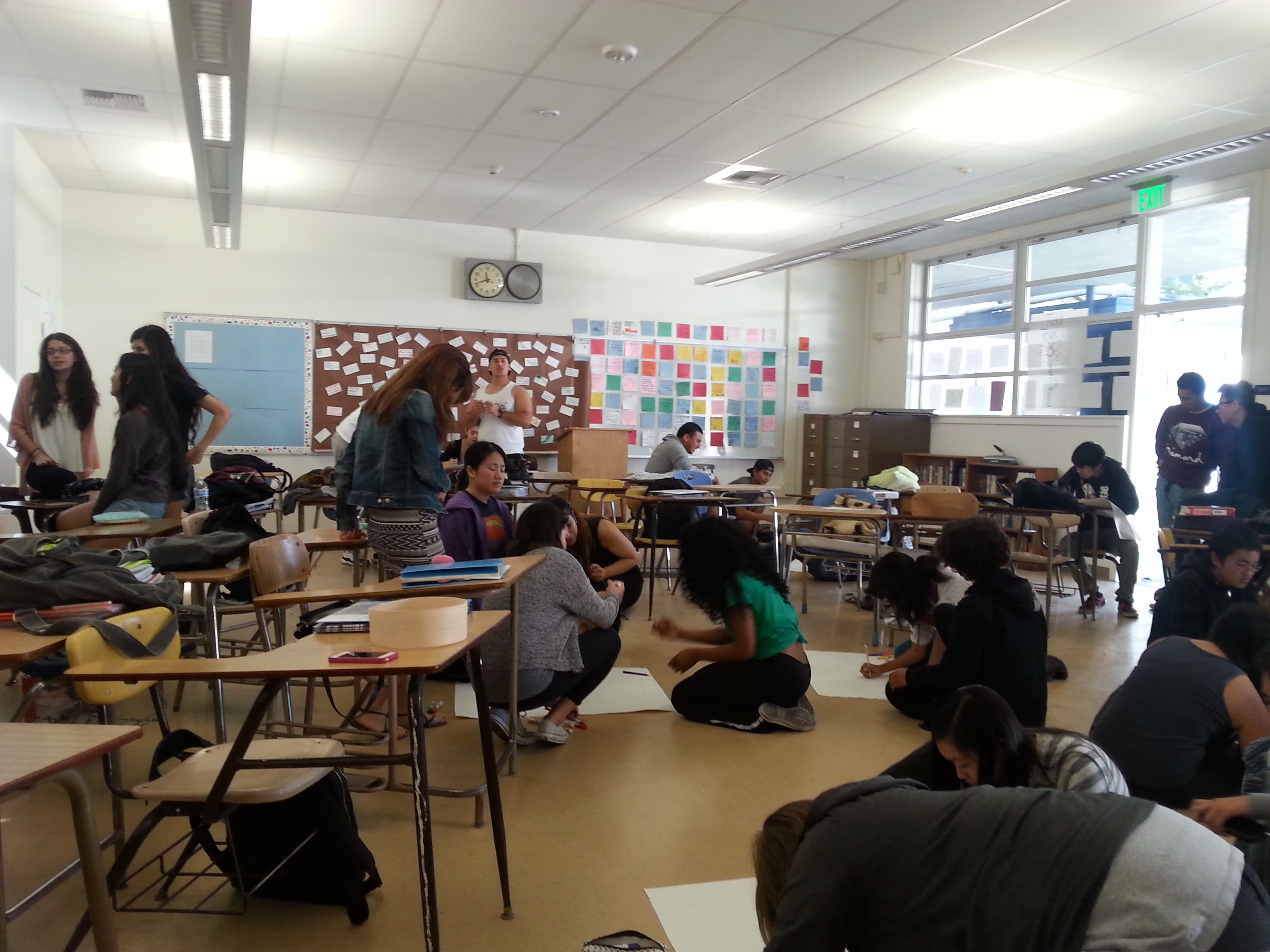
students in a classroom

With talk of objectives, outcomes, and standards, this very human element can sometimes get lost. We sometimes forget that each of these people has his or her own successes, struggles, and story. We push through in the effort to deliver the same content to everyone and to hold them to high standards. But, they are still people and people are messy and complicated.

We don’t always know what burdens students carry. It may be late in the year before we learn that a student has lost a sibling or parent in recent years or that they are caring for an aging grandparent or that they care for a younger sibling in the afternoon or that the family is struggling financially. Not that we can remove these challenges, but being reminded that a student’s entire life does not revolve around our class brings it into perspective.

At one point in my career, I taught at a Community Day School serving students in grades 7-12 who had been expelled. Not surprisingly, nearly every student there carried a great burden: food insecurity, past traumatic experiences, struggles with drug abuse (their own or within the family), violence in the home or neighborhood, etc. These circumstances did not provide an excuse, but it was a stark reminder of why most of them struggled so much in school. All the formative assessments, standards-based instruction, student-led activities, genius-hour projects, and lessons on growth-mindset, grit, and mindfulness wouldn’t change their circumstances. (Not that these techniques don’t have value.) Instead, we have to take students where they were and try to move forward.

I was recently reading through writing reflections I assigned students in a class I’m teaching at a community college. I wanted them to think about their strengths as writers, as well as recognize areas where they could improve. I also wanted to make sure they reviewed my detailed comments. (Because they submit work online, I can see if they neglect to return to the assignment after it has been graded to view feedback.) I ask a few questions about the comments they receive and what they plan to remember (keep doing what is working) and work on (improve) for the next assignment. I also ask, “Were there factors that may have contributed to a lower score than you hoped for?  If so, explain. (Not excuses, but circumstances, gaps in understanding, etc. such as “I had many papers/tests due at the same time.”; “I was busy and was pressed for time. It wasn’t my best work.”; “I had difficulty deciding on a topic.”; “I procrastinated.”; “I submitted late.”). The responses are so revealing. Several students indicated that they are having difficulty adjusting to the expectations of college or balancing work and school. Some are caring for ill or aging relatives, commute a long distance, or have their own children to care for and so, their schedule is not always predictable. Not one student presented an excuse or “sob story.” Instead, they reflected on what is within their control and what they can to do adjust. Granted, these are adults. But, I was struck that I needed the reminder that just because a student may not submit their best work or may miss a deadline, it’s not always because they don’t care about the class or their performance. It’s not necessarily an indication of lack of effort or laziness. It becomes my job to stay with them and encourage them to keep at it and not write them off.

It’s a tricky balance having high expectations for 150 individual students on any given day. It’s hard to be fair and kind and supportive with 150 individual personalities. Yet, as exhausting as it is, we have to try.


Borrowed Classrooms and Carpools : How Accidental Professional Development Made Me a Better Teacher

When I was a first-year teacher in the fall of 1992, I really had no idea exactly what I was getting into. Sure, I had earned my teaching credential and completed student teaching, but I had never had my own classroom and five classes full of students for an entire year. I was 23 years old and didn’t know much about Long Beach Poly High School where I would be teaching English and Speech.

Long Beach Poly is a giant school in a giant district. At that time there were approximately 4,000 students comprised of those enrolled in a district honors magnet program (referred to as PACE), as well as kids from the neighborhood. The students in the PACE program were clustered together in most of their classes, away from the rest of the student body. The teachers seemed to be “clustered,” too, based on if they taught in the PACE program or if they taught . . . the rest of the student body. It’s easy for students . . . and first-year teachers to get lost in such a large school.

As a first-year teacher, my contract stipulated that I must be given my own classroom (while other teachers often had to share several different classrooms). I was assigned to teach in a brand-new bungalow. This sounds great, but it was on the outskirts of campus and I wasn’t even given a key to my room until lunchtime the first day of school. So, I didn’t have the opportunity to set up my room before school started and I had to find a custodian to open my room for me before school on the first day. I also didn’t have electricity for two weeks, which meant teaching in the dark . . . literally and figuratively. There didn’t seem to be much of a sense of urgency from anyone in providing electricity in my room. I didn’t really know who to go to for help. Eventually, I went to one of the three assistant principals to again ask about power.

It was in her office that another teacher asked if I had third period conference because he wanted to know if he could teach his third period class in my room. He was currently assigned to teach his class in the diesel mechanics room, which clearly was not ideal. Not knowing any better, I said sure, he could use my room. I didn’t know him, but then again, I didn’t really know anyone. Only later did I realize that I would no longer have that time to work quietly in my own classroom because he would be there with a room full of students.

This arrangement turned out to be more significant than I ever could have realized.

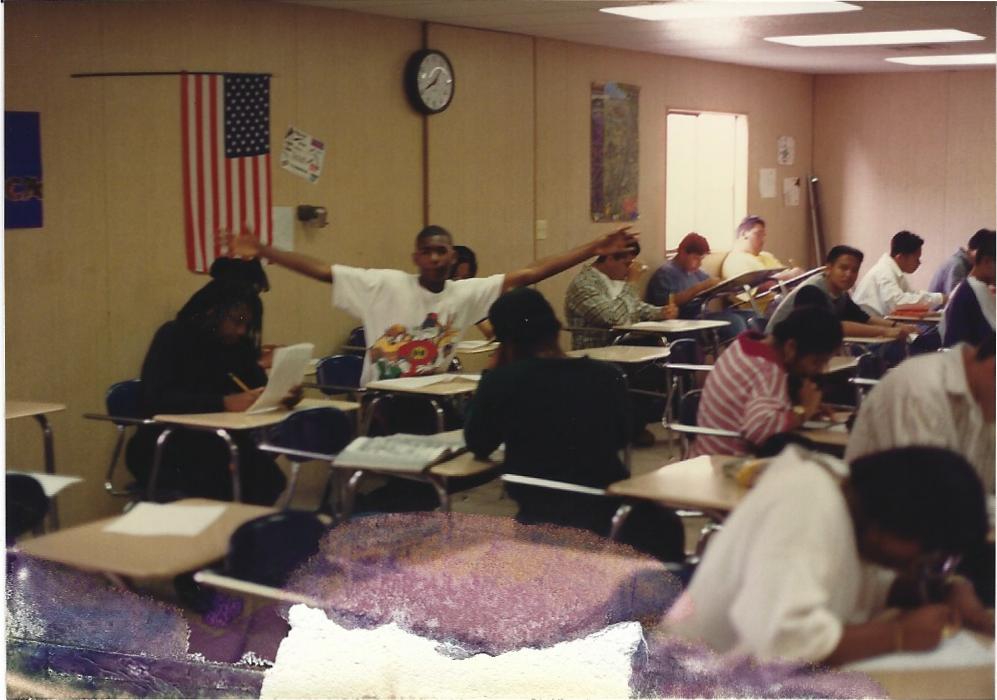
Long Beach Poly Classroom
My classroom at Long Beach Poly High School

Though I was tempted to leave the room during my conference period, so this teacher could have his own space, I ended up staying more days than not. At first I couldn’t believe how he spoke to students. He was direct, funny, honest. He poked fun at his students . . . all of them, in a way that showed he really knew them. And, they responded. They bantered with him and hung on his every word. He did not interact with students the way my master teachers had modeled. I began to re-think how I spoke with students. Maybe I could be more myself rather than playing the role of a teacher.

Not only did I see another way of behaving like a teacher, but this man also shared lesson plans and strategies, offered advice, and just encouraged me to hang in there. Teaching can be very isolating and that first year is especially tough. Most teachers enter the profession with high hopes and altruistic intentions. But, it is lonely, exhausting work, and though there are successes, there are also many, many failures. Sharing a room for even one period changed my perspective of the teacher I was to become.

Long Beach Poly class
My first year teaching, I struggled to find my best approach. Though we struggled at first, this turned out to be one of my favorite classes. [Not pictured: many students who didn’t show that day.]


Years later, at another school, in another district I was commuting 30 minutes to work. (In Southern California we measure distance in time. The drive was about 11 miles and could take from 20 minutes, if I left at 6:30am, to an hour, going home on a Friday.) Eventually, I started carpooling with another English teacher. Not long after that my husband (also an English teacher) was hired at the same school, so the three of us carpooled. Carol taught at the same school for going on 30 years and I had about five years of teaching under my belt at the time. The conversations we had to and from school for many years did more to educate me about teaching than any class or formal professional development ever did. We would talk about what our plans had been for our students and debrief how things went. We celebrated successes, and reflected on failures.

And, boy were there failures.

Teaching up to 175 students, five days a week, for 180 days provides ample opportunity for failure. Though Carol was a “seasoned veteran” teacher, she continued to try to new things and adjust her approach each year and for each class. She was not some experienced teacher who merely pulled out a binder and turned to the handout for day 47. What was great was hearing her talk about developing some new project or activity, only to have it fail miserably. Sometimes it would work great with one class, but not another. (We all know how classes have different “personalities.”) It was encouraging to know that someone with far more experience than me still failed–and, more importantly, re-grouped, adjusted, and returned to teach (and possibly fail again) the next day. We would laugh about what went wrong and how we adjusted or admitted to students that something didn’t go as planned. I thought by this time, certainly she would have it all down pat. But, that is the thing with teaching. It doesn’t work that way. There is always a human element and that element is organic, fluid, and unpredictable. And there are up to 35 of those elements . . . in every class.

These two teachers fell into my life and forever altered how I approach working with students. But, I’ve had other brief interactions that impacted me, too. One year when our school was under construction, a math teacher asked to use my room during my conference period because she was in a bungalow and the AC was out. (If you’ve ever taught in one of these “portable” bungalows on a hot day with no AC, you understand why this is necessary.) I didn’t know this teacher at all. I knew her name, that she taught math, and that students said she was tough. I had so much fun watching her teach that day. I hadn’t taken a math class since my freshman year of college, and the pedagogy has changed a lot since then. But, it wasn’t really the math that I revisited that day that sticks with me. This teacher really knew her students and really wanted them to succeed. She predicted who would be “off-task” and brought them back. And, she was funny. She wasn’t “hard,” she had high expectations and helped her students meet them. She and I had a connection after that day that we wasn’t there before.

In my 23 years teaching high school, I’ve spent countless hours on professional development–conferences I requested to attend, conferences I was required to attend, district inservices and training, school site inservices and training, workshops, presentations, classes. Sure, some of these offered specific materials, projects, activities, approaches, and ideas that I could use in my classroom. (Sadly, most of them were painful wastes of time.) But, watching others teach, getting to know them, chatting with other teachers about ideas, struggles, successes and failures did far more to help me become a better teacher than any inservice or workshop ever did. I connected with these adults and respected them. I “stole” ideas and strategies and made them my own. I didn’t try to emulate or imitate them, but I found my own style and approach. Oh, and that teacher at Long Beach Poly who used my room . . . we’ve been married for 21 years. And though we don’t teach at the same school anymore, he still fails, but keeps showing up every day. We still tell stories and laugh.

Windows and Water: What School Facilities Communicate

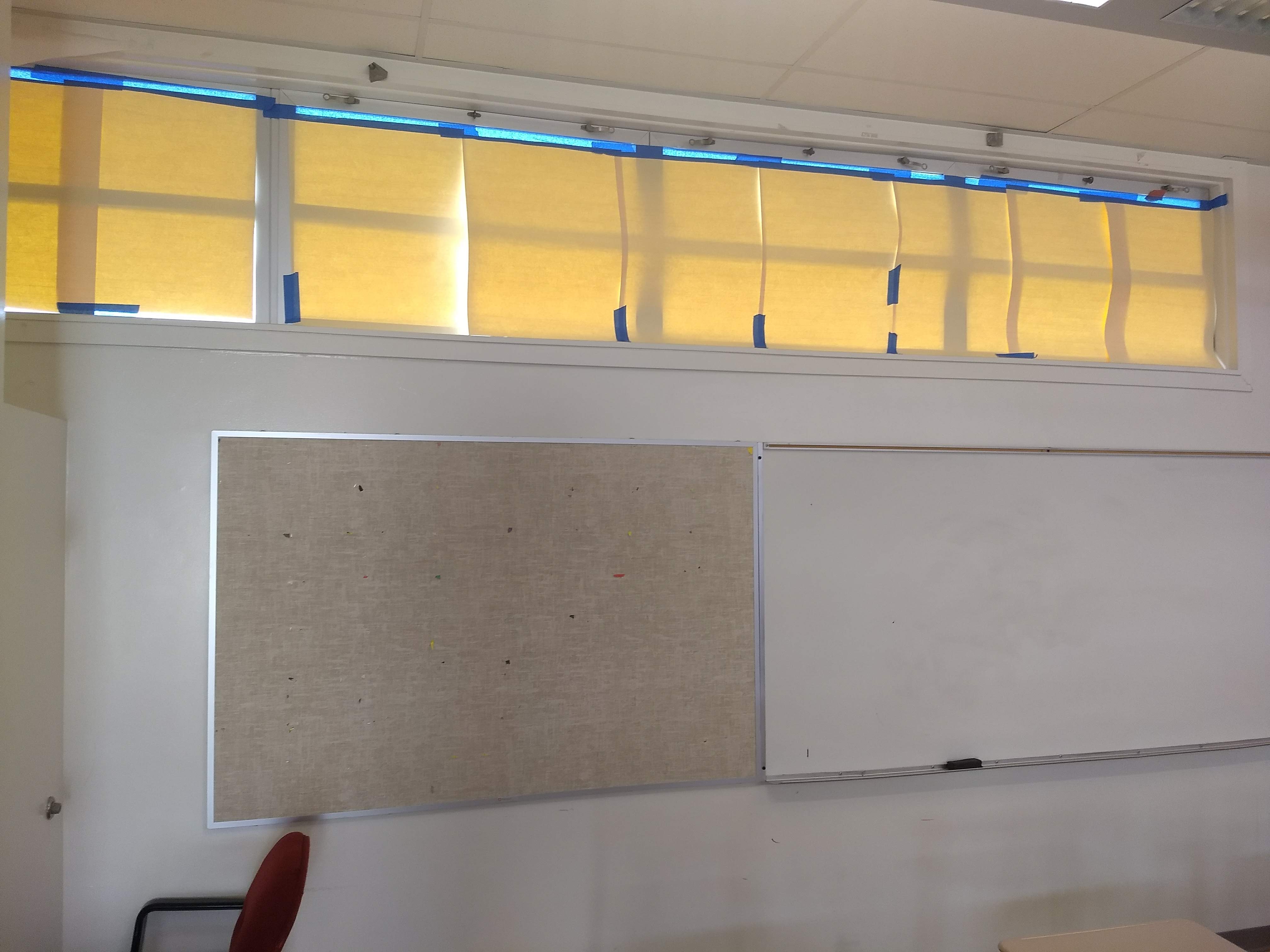
Last week I balanced on a two-drawer file cabinet and taped tag board over windows with painter’s tape. The results are not very aesthetically pleasing, but they will do the job. My husband’s high school students will no longer be blinded by the sun in the afternoon.

Several years ago city residents passed a bond measure to renovate the schools in the district. There were several components including classroom floors, electrical work to accommodate ceiling-mounted projectors, new drinking fountains . . . and windows. The first of four high schools elected to get new windows, so the remaining three high schools were required to get new windows, too, in the interest of equality.  As part of the renovation, the really old, dirty, sticky vinyl curtains were removed. (Did I mention they were sticky? How do they get sticky?) The new windows look nice and are tinted. But, that’s the problem . . . it’s a slight tint. The sticky curtains were removed, but not replaced because (we were told), the windows are tinted. So, if a teacher wants to darken the room to show a video clip or slides of some kind (using the ceiling-mounted projector), the room can never really get dark enough. The south side of my husband’s classroom does not have eaves. So, in the afternoon, students in the first row have the sun shining directly into their eyes (though they do look angelic sitting in a circle of light). These are the windows I covered. On the other side of the room the windows run much lower and allow any student or adult to see inside the classroom.IMG_20180904_123750863

There is also no way to conceal the presence of a class in the event of an active shooter situation. (Yes, we have to consider these things now.) At one point, there was discussion of building up the wall on that side of the rooms so windows would be above sight-lines in the interest of safety. I’m not sure why that project was ultimately removed from the plan

Walk around campus and you’ll see how various teachers have addressed this issue. Some are crafty and have made fabric “window treatments.” Others purchased “temporary” paper blinds. Some used construction paper, butcher paper, or tag board and masking or painter’s tape to cover windows. Aside from the money spent by teachers on materials, there are time and safety factors to consider. Teachers and their friends, significant others, and spouses stand on furniture or sometimes actual ladders in order to reach the top row of windows. What if one of them fell? Who would be at fault?

But, there’s another issue. What do students see when they walk into classsrooms? What do they learn about planning and the value adults place on their experience in school when they learn that millions of tax dollars were spent on windows and now they cannot see videos and slides clearly, they have to shade their eyes in class, and will be left vulnerable should there ever be an active shooter on campus. I suppose you could say that they learn that their teachers come up with some creative solutions to problems and just handle them. But, most of the solutions, save for the very crafty types, look messy and unattractive. (Yes, I’m saying my handiwork looks messy and unattractive.) We tell students to present themselves well in their speech and attire and to complete assignments neatly. These jury-rigged window coverings do not model these lessons well.


But the renovations didn’t stop there.

Students used to complain that the drinking fountains were either inoperable or filthy. Renovation meant sparkling clean new water fountains. Only they didn’t stay that way long. Water pressure is often low and the porcelain is covered in dirt. So what do students do? They buy water. We want to reduce waste and trash–for the environment, but also to keep school clean and not burden adult custodians with cleaning up after teenagers. Yet, hundreds of kids are buying water in single-use bottles daily. We want them to be fiscally educated and responsible for their belongings. Many schools now have water bottle fillers. And some sell reuseable bottles with the school name/mascot which not only would reduce waste, but also work toward building school pride. But, here students are again sent the message that something so basic as access to clean water fountains is not a priority. Yes, part of this is perception. Students think the water from the fountains is dirty, so they don’t use them. They are not used, so they get dirty. Something is missing here.

I realize there are many schools across the country with facilities in great disrepair. There are old schools in communities where bond measure aren’t passed. But, I think many in this community where a 800-square-foot, two-bedroom, one bath home in the shadows of the school stadium is listed at $580,000.

The physical facilities communicate volumes to kids about the pride they should have in their schools . . . and the value placed on their education by the district and community. What are they learning when their classroom windows are covered in tag board and their drinking fountains are filthy? It may seem like these are minor issues, but these things add up. Walk around your school or your kids’ school. What do lessons do you take away from the buildings, paint, lunch benches, windows, and water fountains?


Outdoor Studies–Lessons in Confidence and Survival in the Wilderness and Beyond

When I was in college I figured out that I paid the same tuition if I took eight units or 17 units. So, I figured I’d find some classes outside my major to take for fun. I enrolled in 12-15 units toward my degree and then I frequently enrolled in another 1-2 units of classes that just seemed interesting. Along the way I took modern dance, tennis, yoga, and several Outdoor Studies (now called Wilderness Studies) classes.  I started with backpacking my sophomore year. Later I went on to take rockclimbing, kayaking, another backpacking class, and winter mountaineering. My experiences in those classes taught by the wonderful Bill Webb forever changed my outlook on the outdoors, teamwork, physical endurance, and my own ability to meet challenges.

I’m not quite sure why I chose backpacking, considering I had traveled very little in my life and had never even been camping. I was raised by intellectuals who placed great value on academics and learning. My mom, dad, and stepdad were all teachers and my mom and stepdad also became administrators later in their careers. I am grateful in the way they instilled curiosity and a love of learning in me. But, I didn’t play sports and I had little experience with activities that were physically strenuous or difficult. So, taking a backpacking class was a pretty big stretch.

In each of these classes, we learned about how to be safe in the wilderness–carry our 10 essentials, travel in a group, tell someone where we were headed, respect nature and her changing moods. Each class addressed various topics from specific guidelines on the equipment we would need, to physical conditioning. (In preparation for kayaking, we were giving a piece of pvc pipe and a rope on which we were directed to tie a gallon jug filled with water. The idea was to wind up the rope to strengthen our arms in preparation for very long days kayaking on Lake Powell.) We were also assigned reading, writing, and research projects. For the kayaking class I read Everett Ruess: A Vagabond for Beauty and learned about his life and disappearance in the area where we would be. I also read Edward Abbey’s Desert Solitaire for one of the other classes. I researched avalanches for the winter mountaineering and learned what conditions cause avalanches to be likely and how they are often triggered. I researched how to tell time by the stars and how to prevent and treat hypothermia.

At the end of each course, we went on a trip to backpack, kayak, or climb. My first backpacking class only involved a few days in San Jacinto above Palm Springs. The culminating activity for kayaking involved two weeks paddling Lake Powell. We traveled to Joshua Tree for rockclimbing. Winter mountaineering took us to Mammoth for a week or so. We carried our backpacks while traveling on cross-country skis. These trips were an opportunity to put what we had learned to the test. Each time I was way out of my comfort zone. The physicality of each experience was very challenging for me.  But, I was highly motivated to keep up and not complain, especially since women were outnumbered 3-4 to 1. mitzi--winter mountaineering

To be clear, these were not easy outings. When backpacking (with a pack that was about 50+ lbs. and I weighed about 135 at the time) we would typically hike about 10 miles a day. When kayaking, we would wake around sunrise and paddle for 20-25 miles. Rockclimbing involved hiking to our climb site and then, well . . . rockclimbing all day. (This was long before the popularity of indoor climbing walls. We climbed actual rocks.) Winter mountaineering was really tough. Everything was a challenge–getting up after toppling over on cross country skis with a heavy backpack, melting and boiling enough snow to cook food, staying warm. It was cold. I woke one morning and the thermometer on my backpack read 0° F. When nature called it was a tricky balancing act–especially for a woman. I’ll let you imagine that on your own. We built snow caves (a requirement for the class), traveled for miles, and went for a ski to warm up when we got cold.

There was one particular incident though, that really sticks with me. One year I took a summer session backpacking class. This trip was longer–two weeks–in the Wind River Range in Wyoming. The mosquitoes were vicious. Insect repellent was effective, but when we decided to take a sponge bath, we would have a friend stand behind us to swat away the mosquitoes with a shirt because as soon as that insect repellent was washed off they would attack. Though it was July, snowfields could still be found. Our instructor required us to carry ice axes. One day our activity was to learn how to stop ourselves with an ice ax if we were ever to slip and fall on snow. We were instructed how to rotate our bodies to jam the ice ax into the snow to stop our slide in four ways–feet first on our backs, feet first on our bellies, head first on our backs, head first on our bellies. One of the student leaders demonstrated and we lined up to practice. I was scared to death. I procrastinated and waited. I hoped I would get out of this task, after all, I was taking this class for fun, right? I was so frightened that I cried. I didn’t make a scene about it, but I was petrified. Bill Webb, my amazing instructor was patient. He listened to me say that I couldn’t do it. And he told me I could . . . and that I would. He waited . . . and waited. And, it became clear to me that he wasn’t going to let me off the hook. So, I took the plunge and managed to stop myself from skidding into the rocks below with just my ice ax.

I often think about that day in Wyoming–when I’m faced with a situation that intimidates me. I also think about Bill Webb and how his calm stubbornness was the nudge I needed. I’ve used that same technique many times in my speech classes with students who are battling stage fright.

It has been over two decades since I learned to backpack, kayak, and rockclimb, but the lessons learned stick with me.

  • Preparation and having proper equipment matter. Hiking boots must fit well and be sturdy. (Check out Cheryl Strayed’s Wild for details about what can happen when hikers do not have boots that fit properly.)
  • Our decisions and actions affect others. If one person in the group gets injured, everyone must adjust, so it is important to be safe, stay hydrated, avoid hypothermia, and check the ego.
  • Climbing up a rock is as much about problem solving as it is strength and conditioning. Not having the same upper body strength as many of my male companions, I relied more on footwork and balance.
  • Food tastes better outdoors. Ashcakes were a wonderful treat after kayaking all day. (But a burger on fry bread after two weeks camping tastes even better.)
  • Lakes fed by snow runoff result in sponge baths.
  • We are capable of much more than we think we are.
  • When presented with tough situations, the right person can push us well beyond what we think we are capable of.

Flexible Scheduling in Big Sky Country

Yesterday I traveled from Los Angeles to Bozeman, Montana. While waiting for our flight out of LAX, an articulate young woman struck up a conversation with my husband. She asked if we were headed to Bozeman and indicated that she is from here. A few exchanges revealed that she is a ski instructor and student . . . at Bozeman High School. So, what do two teachers who are also parents of a soon-to-be-high-schooler do in this situation? Ask dozens of questions about her high school experience, of course.

It turns out that she is about to begin her junior year and described herself as a “part-time student.” But, really, she just attends traditional classes on a part-time basis and also takes a few online classes so that she has time to work as a ski instructor. Having taught the first online class offered in the district I worked in for 20+ years, I was curious about her online course offerings and experiences. I had to repeatedly pester my administration to be permitted to teach an online class. I pushed for more hybrid and online offerings for students. But, only a few additional courses were ever added. The benefits of having local teachers facilitating these classes is invaluable in my opinion. Still, I’m a big fan of flexibility and at least she had some options. Most of her online classes are based in Missoula, so she cannot speak in person to her teachers. But, she did say that it was easy to communicate online with them. She is currently taking a class through Brigham Young University (which she had to pay for). That class, she reported was terrible and not user-friendly at all.

What was interesting though, was simply that she had so many options available. Her school allows for students to take classes at times that work for them. You might think that she intends to pursue a career as a skier, given that she is making time to work as an instructor. This isn’t her plan, though. When our gate was changed and we walked over together, she told me that she usually goes to a summer dance camp/workshop because she’s “a dancer.” But, she doesn’t want to pursue that as a career either. Instead, she wants to be a marine biologist which is why she spent the summer in Hawaii with relatives.

Bozeman is a city of about 45,000 in a state of just over a million people. The area code for every phone in the state is 406. Let that sink in. Bozeman High School has about 2,200 students. This city is growing at a rapid pace and schools are being built to accommodate the influx of students. Still, it’s hardly the bustling metropolis of Southern California.

My family and I visit Bozeman several times a year and have seen the expansion of this small, beautiful, and friendly city. People at home in California often ask what Montana is like–is it rugged and all open space (yes, some parts are, but not everywhere), are there a lot of cowboys (yes, but not everyone is a cowboy), do they have Costco (yes, and Target). There is an underlying assumption by many that Montana is “backward” or behind the times. But, really, Bozeman is beautiful, progressive and has wonderful food and the friendliest people (and dogs) we’ve ever met. But, we’ve often wondered about the schools. How could the one high school in the city have more to offer than where we live in Southern California? After all, there are so many school districts there and surely there must be some element of competition. They must draw on combined experiences to implement the best practices, right? Plus, people pay a lot of money to live in Southern California and move to certain zip codes just for the schools. They must be innovative and progressive and flexible, right?!

But, then we had a chance encounter with a high school student in the airport. She described her school as “good” and elaborated on all the Advanced Placement and elective and online course offerings she had available. She has been able to pursue avocations of skiing and dancing, while discovering her intended career path. She has taken a variety of online classes–German, Advanced Placement U.S. History, and gym/physical education. Her sophomore honors English class read Beowulf, Catch-22, Macbeth, Candide, For Whom the Bell Tolls, among others. It was synced with her European History class. Sounds pretty progressive to me. We have to do better. While people in my own community in California suggest that Montanans might be behind-the-times, it sure sounds to me like their kids are ahead of ours in many ways.

A quick glance at the Bozeman High School Bell Schedule reveals that they offer 50 minute classes, zero through seventh period. Years ago when I inquired as to why we weren’t offering more zero or seventh period classes, I was told that the district wouldn’t include those classes in our “allocation.” Meaning offering them would cause other classes to be larger. In other words, the district really didn’t support offering courses outside the traditional school day. Another point to note is that lunch at Bozeman High School is a full 50 minutes, plus a five minute passing period, as opposed to the 31 minutes with a seven-minute passing period at the school where my husband teaches. Why aren’t the high schools near where I live doing the same?

We have the ability and technology to offer flexible schedules with hybrid and online options. There are students, families, and teachers who want flexibility. We can still support students while providing rigorous courses. Most importantly, we are tasked with preparing students to enter a changing world and so we need to adjust our practices. Why aren’t we doing more to give students and families options that fit their lives? We can do better. Why aren’t we?

Website Powered by WordPress.com.

Up ↑